- Your cart is empty
- Continue shopping
-
 tejas
tejas - Posted on
- Categories:Food
- 0 comments
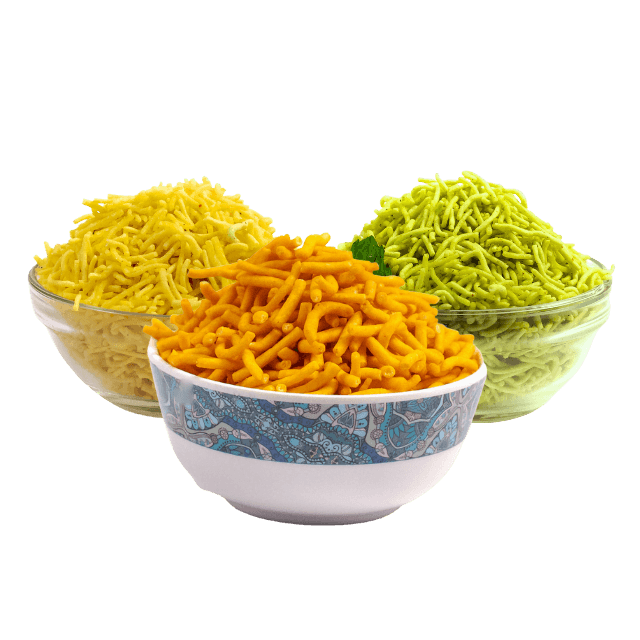
Finding Indian snacks that are genuinely gluten-free is harder than it looks. Most namkeen is made from besan (gram flour), which contains no gluten at all — so people assume the whole category is safe. It usually is not, and the reasons are not obvious from the front of the pack.
Where gluten hides in Indian snacks
Asafoetida (hing)
This is the one almost nobody checks. Pure asafoetida resin is extremely strong and difficult to handle, so the hing sold in most Indian kitchens is compounded — blended with a carrier flour. That carrier is very often wheat flour.
Hing appears in a huge proportion of Indian savoury snacks. If you are coeliac, this is the single most important ingredient to ask about, and the one least likely to be mentioned on a label.
Mathri, kachori, samosa and papdi
These are made from wheat flour (maida or atta) by definition. No version of them is gluten-free.
Bhel and mixtures
Bhel puri mixes usually contain fried maida crisps alongside the puffed rice. Many mixed namkeen blends include at least one wheat-based component even when most of the mix is besan.
Shared frying oil and equipment
A snack can be made from gluten-free ingredients and still pick up traces if it is fried in oil also used for mathri, or made on shared equipment. For coeliac disease this matters; for mild sensitivity it may not.
What to actually ask a manufacturer
- Is your asafoetida compounded with wheat flour, rice flour or something else?
- Does this product contain maida, atta, suji or barley in any form?
- Is it fried in oil shared with wheat-based products?
- What is in the “spices”, “masala” or “flavouring” on the ingredient list?
A manufacturer who can answer those four questions clearly is worth buying from. One who simply says “yes it’s gluten-free” without detail is worth a second look.
Naturally gluten-free snack styles
These are the categories most likely to work, subject to the checks above:
- Plain besan sev — gram flour, oil, salt and chilli, with nothing wheat-based
- Roasted and pressed chana — such as Chana Jor, where the base is simply chana
- Peanut snacks — though coated varieties often use besan or maida in the coating, so check
- Banana chips — ours are raw banana, coconut oil and rock salt, and nothing else
- Dal-based snacks — fried moong or chana dal, where the dal is the whole product
- Papad — moong, urad and chana dal papad are typically wheat-free, unlike wheat papad
You can browse the range we group as gluten free, and every product page lists its full ingredients so you can check for yourself.
FAQ
Is besan gluten-free?
Yes. Besan is ground chana dal and contains no gluten. The gluten in besan-based snacks comes from other ingredients, most often compounded asafoetida or added wheat flour.
Does hing contain gluten?
Compounded asafoetida frequently does, because wheat flour is commonly used as the carrier. Some brands use rice flour instead. Always ask rather than assume.
Is sev gluten-free?
Plain besan sev usually is. Check for hing, and for maida in flavoured or coated varieties.
Are papad gluten-free?
Moong, urad and chana dal papad are generally made without wheat. Wheat papad obviously are not. Check the specific product.
What should I avoid entirely?
Mathri, kachori, samosa, papdi, bhakarwadi and bhel mixes. All are wheat-based.
